


















Reviewed by Roxanne Vogel, PhD
An energy gel and a handful of gummy bears both give you carbohydrates, but only one of them was built with your performance in mind.
The difference isn't the sugar. It's everything else: carbohydrate sources, electrolyte content, caffeine availability, and how the formula was designed to move through the GI tract under physiological stress.
How carbohydrates are packaged affects digestion rate, gut tolerance under stress, and practical usability mid-effort. A 2023 study on carbohydrate absorption quantified what GU athletes have observed consistently: not all carbohydrate sources move through the digestive tract at the same rate, and that difference becomes more meaningful as intensity increases (Ribichini, 2023).
Selecting the right format produces steadier energy output, reduced GI discomfort, and a fueling strategy that holds up when conditions get demanding.
Energy formats don't all do the same thing.
Here’s where they differ:
- Digestion rate, and why that gap matters more as intensity increases
- What each format delivers beyond carbohydrates: electrolytes, caffeine, amino acids, or none of the above
- Practical use mid-effort, because consuming a gel at mile 60 of a bike leg is a different physiological context than eating a waffle at the trailhead
- GI response across intensity levels, from easy aerobic pace through threshold and maximal effort
What Are Energy Chews
Energy chews are a chewable, portioned sport nutrition format built to deliver fast-acting carbohydrates during sustained effort.
GU has been formulating products for endurance athletes since 1993, and the chew formula reflects that: dual-source carbohydrates, electrolytes to replace sweat losses, amino acids to support muscles, and caffeine where appropriate.
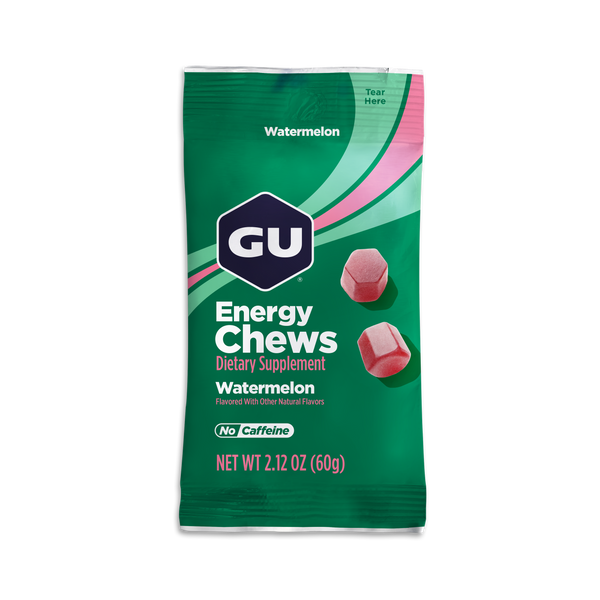
GU’s energy chew lineup
Each serving of GU Energy Chews is about eight chews and 100 calories, built around a carbohydrate combination refined through decades of athlete use.
Carbohydrates:
Fructose and maltodextrin are absorbed through separate intestinal transport pathways, allowing the gut to process more carbohydrates per hour than a single-source formula permits (Mata et, al., 2019).
Electrolytes:
Sodium and potassium are included to address the electrolyte losses that accompany sweat output. Electrolyte replacement is a functional component of the formula, not an additive.
Caffeine:
Caffeine is available at 20 mg per serving in select flavors, enough to support mental focus and endurance without excessive stimulant accumulation across a long effort (Guest et al., 2021). Non-caffeinated versions are available for athletes who prefer to manage caffeine intake separately.
Digestion and gut tolerance
Chews suit efforts where pace allows for chewing.
At high intensity or in the late stages of a long effort when the priority is getting fuel in quickly, gels are the lower-effort option.
At a moderate pace, on a long ride or an easy trail run, chews offer the same carbohydrate delivery in a format that feels more like eating, which some athletes find easier to sustain across several hours than repeatedly taking gels.
Timing
One serving of chews every 20 to 30 minutes is an appropriate cadence for most efforts, tightening toward the lower end as intensity and duration increase.
- In heat or at high intensity, consistent intake becomes more important as GI tolerance becomes less predictable
- Consume fluids with every serving to support digestion and carbohydrate absorption
For efforts under an hour, a single serving before the effort begins is a good general guideline.
Energy Chews vs. Energy Gels
Both gels and chews deliver dual-source carbohydrates and electrolytes, both are available with and without caffeine, and both require fluid intake alongside every serving.
The primary functional difference is digestion rate. Gels require less mechanical breakdown, which means faster gastric emptying, a meaningful distinction at threshold intensity when GI resources are already under demand (Ribichini, 2023, Reynolds et al., 2022).
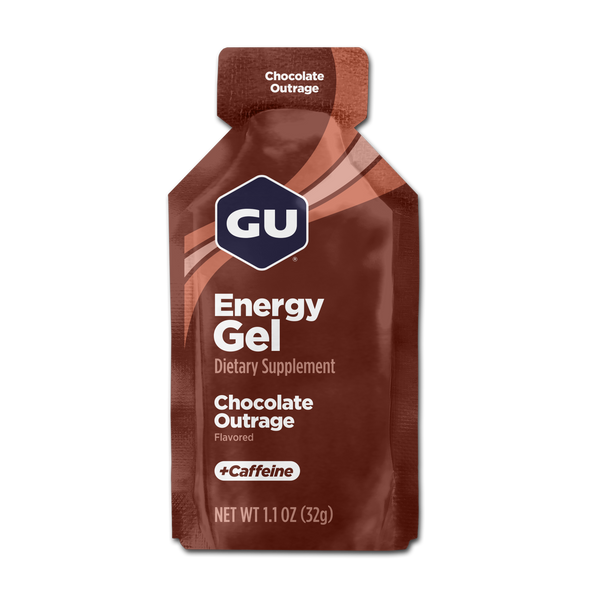
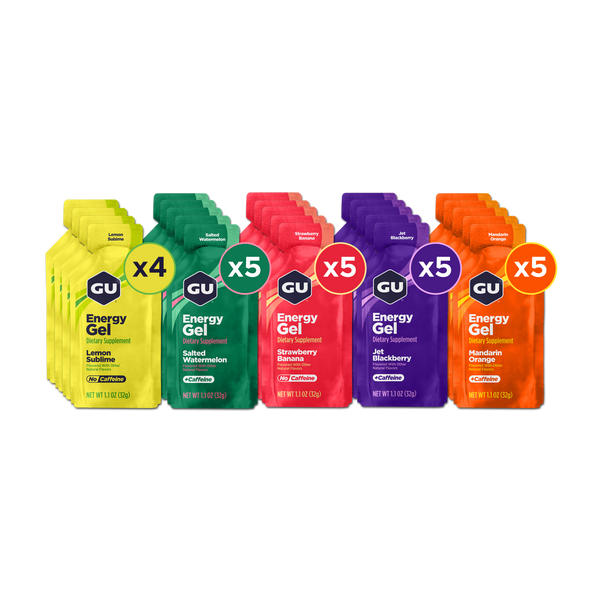
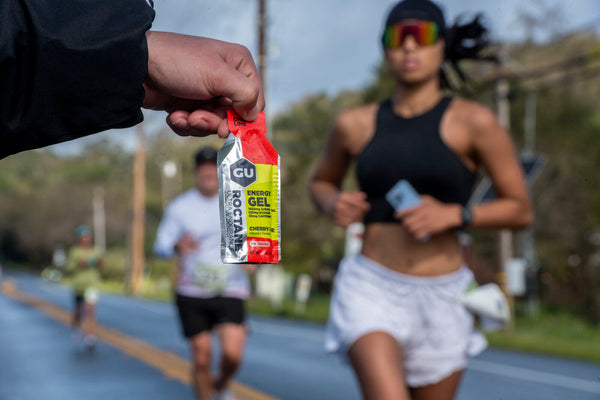
GU’s energy gel lineup
- GU Original Energy Gel: 100 calories and dual-source carbohydrates per serving, the versatile baseline across sport types and distances.
- GU Liquid Energy Gel: The same carbohydrate and electrolyte profile in a thinner, more fluid consistency. Easier to consume at high intensity or in heat for athletes who find traditional gel texture difficult to manage under those conditions.
- GU Roctane Energy Gel: Adds beta-alanine and taurine to the carbohydrate, BCAA, and electrolyte base. Formulated for efforts where muscle protein breakdown is a meaningful concern (ultras, long triathlons, extended climbing days) when protecting muscle tissue becomes as important as delivering fuel.
Digestion and stomach tolerance
At race pace, blood flow is redirected from the GI tract to working muscles, reducing digestive capacity at the point when fueling demand is highest.
A 2025 study on GI stress in endurance athletes confirmed that gut issues are common and complex in this context, and that gut training before race day is one of the most reliable management strategies available (Mlinaric & Mohorko, 2025).
As a general framework:
- Use gels when intensity is high and the mechanical effort of chewing is not practical
- Use chews when pace and cognitive load allow for it
Timing
- Every 20 to 30 minutes is an appropriate starting cadence for most efforts
- Adjust based on intensity, heat exposure, and current GI tolerance
Energy Chews vs. Energy Waffles
If gels and chews are built for the middle and late miles, waffles are built for the start.
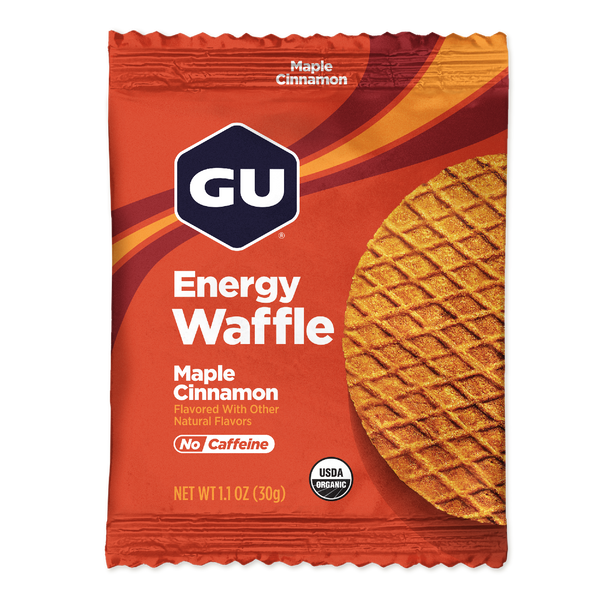
GU's energy waffle lineup
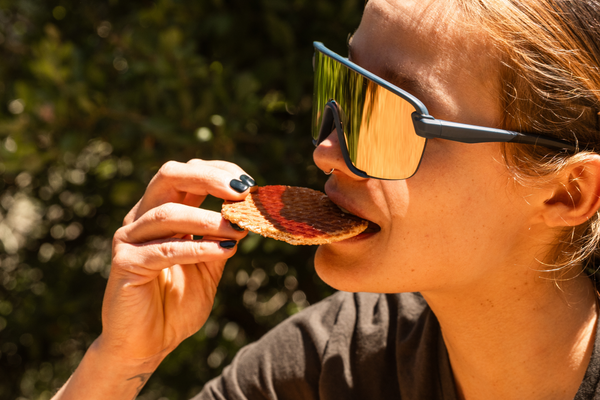
- The GU energy waffle is two thin organic wafers with a syrup filling: 130 calories, dual-source carbohydrates, and electrolytes.
- Compared to chews, waffles digest more slowly, which produces a more sustained energy release. That slower digestion rate makes them better suited to the early stages of an effort when gastric capacity is high and immediate fuel availability is less critical.
For athletes who find it harder to eat as an effort extends, a format that resembles food can be easier to consume than a gel or chew.
Digestion and gut tolerance
Waffles are among the more GI-friendly fueling options available. Slower digestion and real food ingredients reduce the likelihood of GI disruption. Chews digest faster and deliver carbohydrates to the bloodstream more quickly, making them the better option when immediate fuel availability is the priority.
Timing
As intensity increases, blood flow to the GI tract decreases and the ability to process real food formats diminishes.
- Waffles are appropriate in the first hour of an effort, when gastric capacity is at its highest
- Once the effort is 60 to 90 minutes in and intensity is building, chews are the more practical format. Food-based carbohydrate sources are associated with greater GI symptoms than supplement sources during efforts exceeding two hours (Reynolds et al., 2022)
Energy Chews vs. Hydration and Drink Mixes
Chews and energy drink mixes are not competing formats. They serve different functions. Chews deliver fuel. Drink mixes replace what is lost through sweat. For most efforts exceeding 60 minutes, the appropriate strategy includes both running simultaneously.
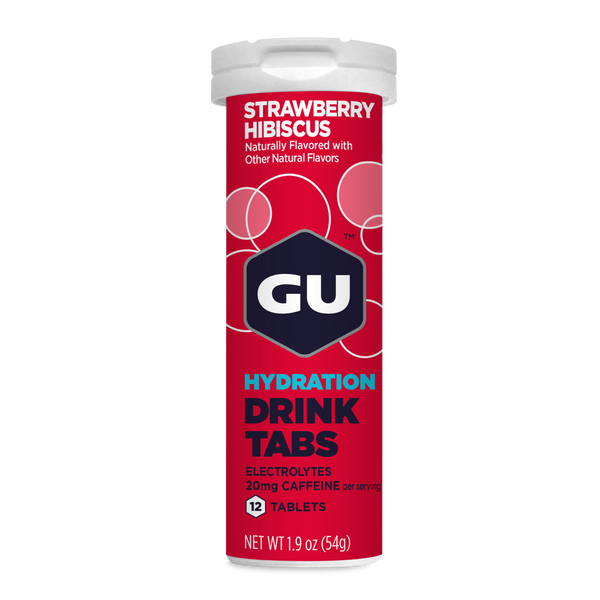
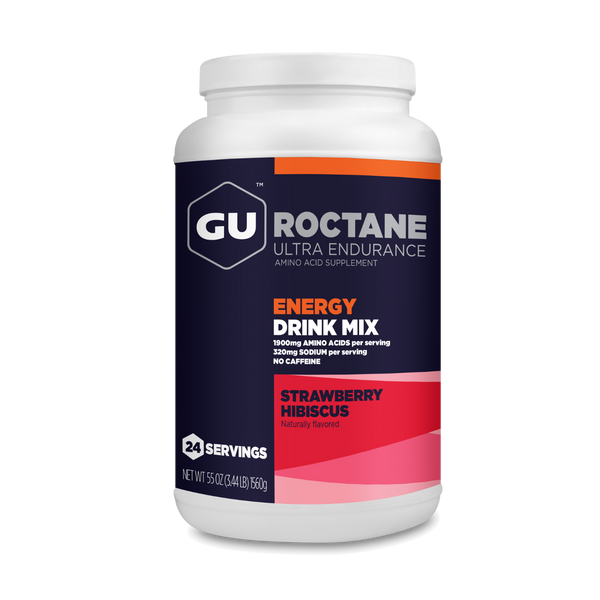
GU's drink lineup
GU Hydration Tabs and GU Roctane Drink Mix are designed to be sipped continuously throughout activity, not taken in single doses like gels or chews.
- GU Hydration Tabs: 10 calories per serving, 320mg sodium, 55mg potassium. Low sugar, low GI demand, designed to convert plain water into an electrolyte-replacing fluid for efforts where caloric delivery from the bottle is not the primary goal.
- Roctane Drink Mix: 250 calories per serving, 59–60g carbohydrates, 320mg sodium, 1,900mg amino acids, with caffeine available in select flavors. Formulated for long, demanding efforts where the bottle needs to contribute to both fuel and fluid replacement simultaneously.
Digestion and stomach tolerance
Liquid and gel carbohydrate formats have been shown to speed gastric emptying and facilitate absorption compared to solid formats (Cao et al., 2025). For athletes managing heat or extended duration, this efficiency is an advantage.
However, purely electrolyte-focused drink mixes do not deliver the caloric load required for efforts exceeding 60 to 90 minutes on their own. Chews or gels are necessary to meet caloric demand in parallel.
Timing
- Begin consuming drink mix early, before thirst is a signal. Thirst lags actual fluid deficit (Kenefick, 2018)
- At the 60-minute mark, introduce chews or gels on a standard cadence
- In heat or at 90+ minutes, use both simultaneously: drink mix managing hydration and electrolytes, chews or gels managing caloric delivery
Energy Chews vs. Candy, Gummy Bears, and Cookies
Candy will get carbohydrates in, and on an easy day, a handful of gummy bears at mile 10 isn't going to derail anything. But candy wasn't formulated with exercise physiology in mind, and that gap becomes more relevant the harder and longer you're working.
Energy Chews vs. Gummy Bears
Gummy bears and energy chews are easy to conflate: both are chewable, portioned, and pocket-friendly. The difference is what's inside and why it matters during exercise.
Gummy bears are sucrose and glucose syrup: simple carbohydrates with no sodium, no electrolytes, and no consideration behind how they move through the gut during exercise.
At low intensity and short duration, the functional gap is narrow. As output increases, the absence of electrolytes and a carbohydrate profile not designed for high-output digestion become meaningful limitations.
Energy Chews vs. Candy
Hard candy and most conventional candy formats introduce a different set of practical problems beyond formulation: portioning is imprecise, the carbohydrate delivery is difficult to time against a fueling plan, and most formats weren't designed to be consumed during physical output.
Two key differences separate energy chews from candy as a fueling source:
Carbohydrate type:
Candy runs on sucrose, a simple sugar carbohydrate source with an absorption ceiling the gut reaches quickly at high output. Energy chews use fructose and maltodextrin, dual-pathway, simple and complex carbohydrates that engage separate intestinal transport pathways, allowing the gut to process more carbohydrates per hour.
Sodium:
Any effort that produces meaningful sweat output requires electrolyte replacement. Energy chews include sodium and potassium as functional components of the formula. Candy does not.
Energy Chews vs. Cookies
Cookies introduce two ingredients that work against mid-effort fueling (Ribichini, 2023):
- Fat triggers GI symptoms and is harder for the gut to process when digestive capacity is already reduced during exercise
- Fiber has been reported to trigger GI symptoms in endurance athletes, particularly triathletes, during sustained effort
There is also a practical concern: cookies won't always survive a jersey pocket or a race vest. Energy chews do.
Can you use candy instead of energy chews?
On an easy day, candy works in a pinch. It delivers carbohydrates, and that is not nothing. But it was not formulated for sport, and the further you get from easy and short, the more that starts to show:
- No electrolytes to replace sweat losses
- Imprecise portioning for fueling targets
- A carbohydrate profile not designed for high-output digestion
The Best Fueling Strategy Uses More Than One Format
No single format covers every demand across a long effort. Most athletes working at serious duration end up sequencing formats: a waffle early, chews or gels through the middle, and a drink mix running continuously throughout. Each format has a specific function within that sequence, and understanding those functions is what allows the fueling strategy to hold up when the effort gets hard.
References
- Ribichini, E., Scalese, G., Cesarini, A., Mocci, C., Pallotta, N., Severi, C., and Corazziari, E.S. Exercise-Induced Gastrointestinal Symptoms in Endurance Sports: A Review of Pathophysiology, Symptoms, and Nutritional Management. Dietetics, 2023. 2(3): p. 289-307. https://doi.org/10.3390/dietetics2030021
- Mata, F., Valenzuela, P.L., Gimenez, J., Tur, C., Ferreria, D., Domínguez, R., Sanchez-Oliver, A.J., and Martínez Sanz, J.M. Carbohydrate Availability and Physical Performance: Physiological Overview and Practical Recommendations. Nutrients, 2019. PMCID: PMC6566225. PMID: 31100798. https://doi.org/10.3390/nu11051084
- Guest, N.S., VanDusseldorp, T.A., Nelson, M.T., Grgic, J., Schoenfeld, B.J., Jenkins, N.D.M., Arent, S.M., Antonio, J., Stout, J.R., Trexler, E.T., Smith-Ryan, A.E., Goldstein, E.R., Kalman, D.S., and Campbell, B.I. International Society of Sports Nutrition position stand: caffeine and exercise performance. Journal of the International Society of Sports Nutrition, 2021. 18(1): p. 1. PMCID: PMC7777221. PMID: 33388079. https://pubmed.ncbi.nlm.nih.gov/33388079/
- Mlinaric, J. and Mohorko, N. Nutritional strategies for minimizing gastrointestinal symptoms during endurance exercise: systematic review of the literature. Journal of the International Society of Sports Nutrition, 2025. PMCID: PMC12258207. PMID: 40650376. https://doi.org/10.1080/15502783.2025.2529910
- Reynolds, K.M., Clifford, T., Mears, S.A., and James, L.J. A Food First Approach to Carbohydrate Supplementation in Endurance Exercise: A Systematic Review. International Journal of Sport Nutrition and Exercise Metabolism, 2022. PMID: 35231883. https://doi.org/10.1123/ijsnem.2021-0261
- Kenefick, R.W. Drinking Strategies: Planned Drinking Versus Drinking to Thirst. Sports Medicine, 2018. 48(Suppl 1): p. 31-37. PMID: 29368181. https://doi.org/10.1007/s40279-017-0844-6
- Cao, W., He, Y., Fu, R., Chen, Y., Yu, J., and He, Z. Review of Carbohydrate Supplementation Approaches and Strategies for Optimizing Performance in Elite Long-Distance Endurance. PMCID: PMC11901785. PMID: 40077786. https://pmc.ncbi.nlm.nih.gov/articles/PMC11901785/