


















Fast Energy vs Steady Energy: How Different Fuels Feel Over Time
Reviewed by Roxanne Vogel, PhD
You know the feeling. Deep into a long effort, your focus starts to slip and your output drops whether you want it to or not. You need fuel.
The fuel format you choose and when you take it is the difference between bonking and finishing strong.
Whether energy gels, chews or waffles are your preference, understanding the difference between fast-acting and steady-release energy formats means you can stop guessing and start fueling deliberately.
Fuel Smart. Finish Strong.
When you eat carbohydrates during exercise, three things need to happen before that energy does anything useful:
- Breakdown: carbohydrates must be broken into simple sugars (e.g., glucose, fructose)
- Absorption: those sugars cross from the gut into the bloodstream
- Utilization: working muscles take up glucose for fuel
The speed of each step depends on the format, ingredients, hydration, and how hard you're working. At high intensity, blood is diverted away from the gut, which slows digestion. At an easy aerobic effort, your gut has more resources to work with.
This is why the best energy gel timing strategy for a hard 45-minute effort looks different from fueling a 12-hour ultra.
Race Days and Long Efforts: Choosing Fast Energy vs. Steady Energy
The difference between a sprint triathlon and a full Ironman isn't just distance. It's the relationship between intensity, time, and how your body demands fuel.
- A hard effort burns carbohydrates fast and restricts gut function
- A 6-hour ride or 50-mile trail run demands a fueling rhythm you can sustain for hours
Match the format to the moment:
Go fast: reach for a gel when…
- Intensity is high and you need rapid carbohydrates immediately
- You're in the back half of a long effort and energy is dropping
- You're running hard intervals (threshold, VO₂ max, race-pace blocks)
- You need a quick energy boost
Go steady: reach for chews or drink mix when…
- You're managing output for hours, not surging. Steady formats prevent spike-and-crash
- You're targeting high carbohydrate intake without gut issues. Slower delivery helps you absorb more per hour
- You're in the early portion of a long session. Steady intake protects glycogen for the back half
Stack both: for centuries, long trail runs, and multi-hour events…
- Gels for fast top-ups at regular intervals
- Chews or waffles at aid stations for texture variety and slower burn
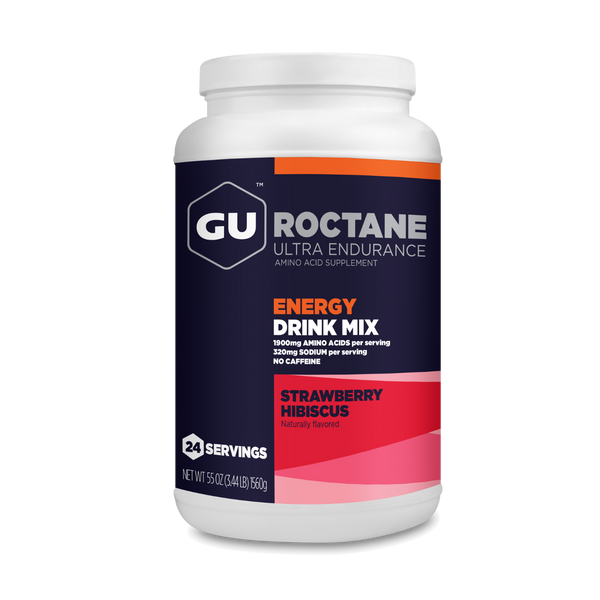
- Roctane Energy Drink mix between solid fueling windows for consistent carbohydrate and electrolyte delivery throughout
The Energy Gel: Designed for Speed
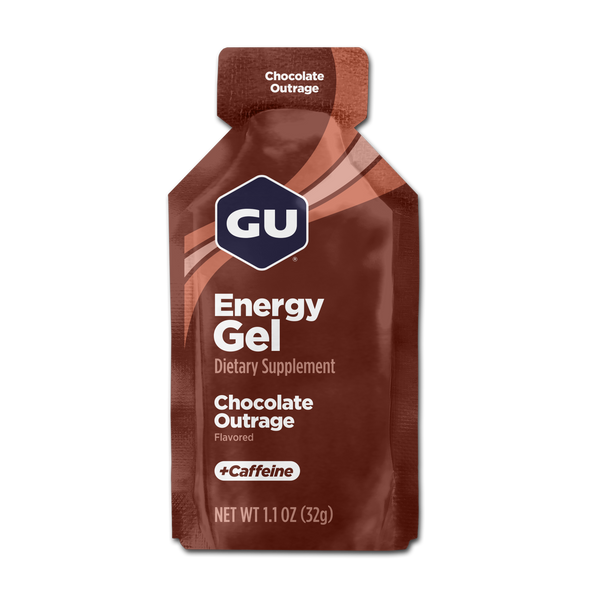
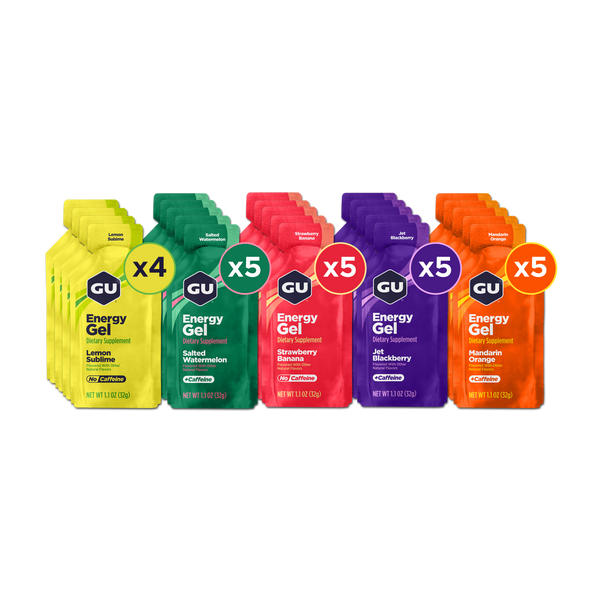
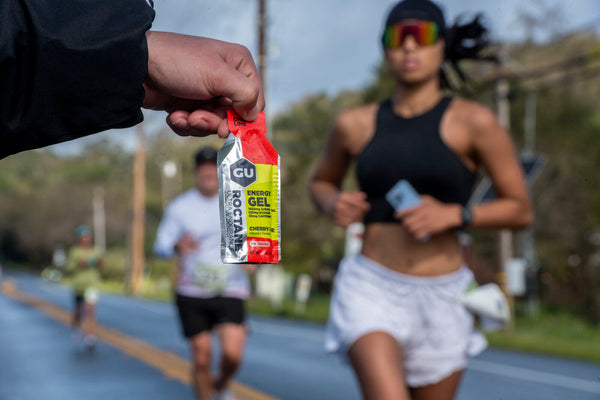
GU Energy Gels are designed to work fast. Tear one open, squeeze it down, and carbohydrates are hitting your bloodstream soon after. No chewing and minimal digestion required, allowing for faster delivery of carbohydrates.
The semi-liquid format means your body doesn't have to work hard to process it. Energy goes in, gets absorbed, and shows up where when you actually need it.
Here's what happens when you take a GU Energy Gel in the middle of your high-intensity effort:
you take the gel
- Goes down easy. The semi-liquid format means your body can start using it within minutes.
it starts moving
- The carbohydrates enter into your bloodstream. Hydration speeds this up, which is why you should always take a gel with 4–8 oz of water.
peak energy hits
- Energy arrives. GU uses two types of carbohydrates that absorb through different pathways at the same time, so your body can take in more fuel per hour than it could from a single carbohydrate source.
energy tapers
- One gel carries you roughly 20-30 minutes at moderate-to-high effort. Don't wait until you're fading. By the time you feel the drop, you're already behind.
Use cases where a gel wins:
- Racing: the fastest absorption of any solid or semi-solid format. Offers peak energy with minimal delay
- High-intensity intervals: threshold blocks, VO₂ max efforts, and race-pace sessions where quick carbohydrates match the demand
- Back half of a long effort: when glycogen is depleting fast and you need an immediate top-up, not a slow drip
- Triathlon transitions: easy to take in T1 or T2 without slowing down or needing to chew
- Sensitive stomachs: the semi-liquid format is easier on the gut than solid food at high intensity
One GU Energy Gel is 100 calories. Light, fast, and designed to absorb quickly into your system, not sit in your stomach.
Product note: Roctane Energy Gels contain the same fast-absorbing carbohydrate base as Original GU gels but add a performance blend of branched-chain amino acids (BCAAs), beta-alanine, and taurine to help delay fatigue and support your muscles during prolonged efforts over 90 minutes. For efforts under an hour, Original GU is the go-to choice.
The Chew: Slower by Design
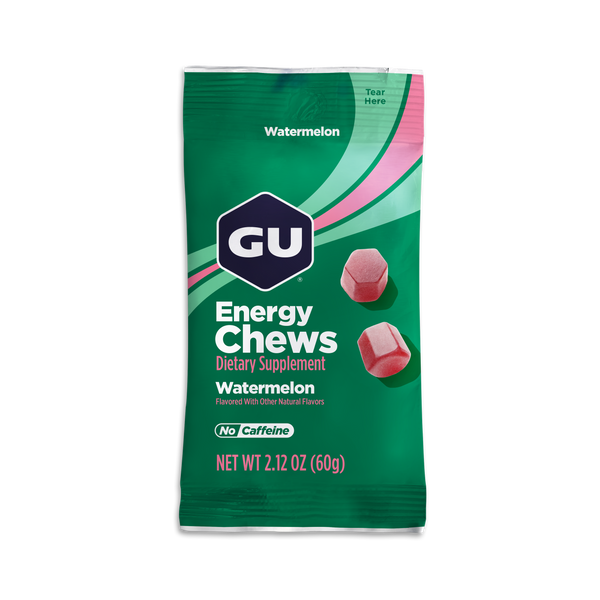
In GU Energy Chews, the chewing and digestion processes involve a slightly longer absorption timeline versus a gel.
But that's not a weakness. It's actually the right profile for a 6-hour bike ride, a hike, or any effort where you don't need a quick energy hit right now, you need a sustained supply over the next hour.
- Chews allow you to spread caloric intake over more time
- The act of chewing can settle cravings for "real food"
- Eight chews = one serving. It’s portable, portion-controlled, and easy to share with friends, if you are feeling generous.
Timing tip: Take a serving of chews 20 minutes before you anticipate needing the energy, not when you're already fading.
Use cases where a chew wins:
- Long rides and ultra efforts: slower absorption means more sustained energy delivery over hours without spiking and crashing
- Early-effort fueling: when intensity is moderate and you want to spread caloric intake gradually rather than hit it all at once
- Flavor and texture variety: on efforts where gel fatigue is real, chews offer something to actually bite into
- Hiking and low-intensity cardio: gut blood flow is more available, making slower-digesting formats more practical and comfortable
- Stacking with gels: use chews between gel windows to smooth out energy delivery across the full effort
One serving of GU Energy Chews is 100 calories across eight pieces. Portion-controlled, easy to split, and simple to manage without stopping.
The Waffle: Real Food Energy, Slower Burn
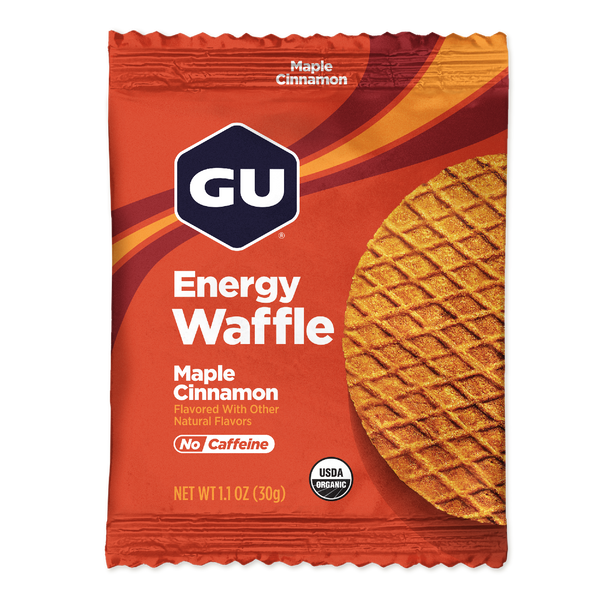
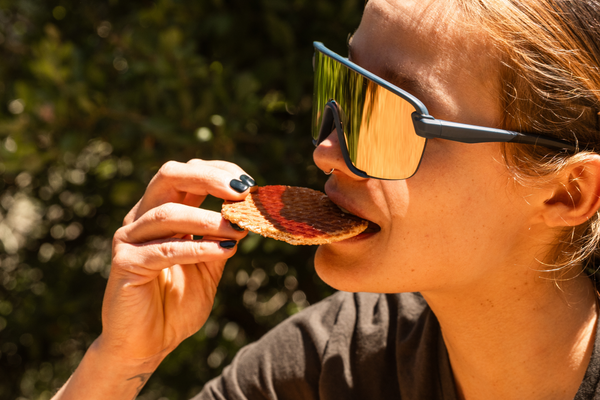
The GU Energy Waffle is the closest GU gets to real food without sacrificing the portability and ingredient precision that endurance athletes need. It has a genuinely slower digestion curve than gels or chews.
Use cases where a waffle wins:
- Pre-event fueling: eaten 30–45 min before a race or hard effort
- First hour of a long event: when intensity is manageable and your gut can handle solid food
- Cycling: the seated position and lower impact relative to running makes solid food more tolerable
- Recovery rides and aerobic base days: when you want sustained energy, not a sugar hit
One GU Energy Waffle is 130 calories. This is important if you're managing a high-calorie-per-hour target on a long ride.
The Role of Caffeine in Absorption and Alertness:
Caffeinated gels add a second performance variable to manage. For most endurance athletes, a dose of 40–100mg per serving is effective for mental focus and endurance.
|
GU Product |
Caffeine Content |
Best Timing |
|
GU Original Energy Gel (caffeinated) |
20–40mg |
Every other gel, or final 60 min of effort |
|
GU Roctane Energy Gel (caffeinated) |
35–70mg |
High-intensity efforts, race day |
|
GU Liquid Energy Gel (caffeinated) |
20–40mg |
When solid texture is less tolerable |
Note: Not all GU gels contain caffeine. Both caffeinated and non-caffeinated options are available across the gel lineup. For longer events, alternating caffeinated and non-caffeinated gels helps manage total caffeine intake.
Tips and Tricks: Unlock Your Full Fuel Potential
Energy gels are effective when used strategically. Research shows that consuming carbohydrates during prolonged exercise can improve performance, delay fatigue, and help maintain power output
The key variables to getting the most out of your fuel:
- Dose: 30–60g of carbohydrates per hour is effective for most athletes; up to 90g/hr is achievable with dual-source (maltodextrin + fructose) formulas
- Timing: Consuming carbohydrates before depletion is significantly more effective than reactive fueling; aim to eat or drink something every 20-30 minutes during exercise
- Hydration: Gels are designed to be taken with 4-8 ounces of water to aid digestion and absorption.
Find a Format for You
There's no universally superior fuel format. There's the right format for your effort level, your gut, and the specific moment where you need energy delivered, whether in a race, on a ride, on the trail, or in the water.
- Need energy fast? Reach for a GU Energy Gel or Roctane Energy Gel.
- Want to spread it out? GU Energy Chews give you a longer absorption window.
- Fueling before or in the first hour? A GU Energy Waffle delivers real-food energy at a pace your gut can handle.
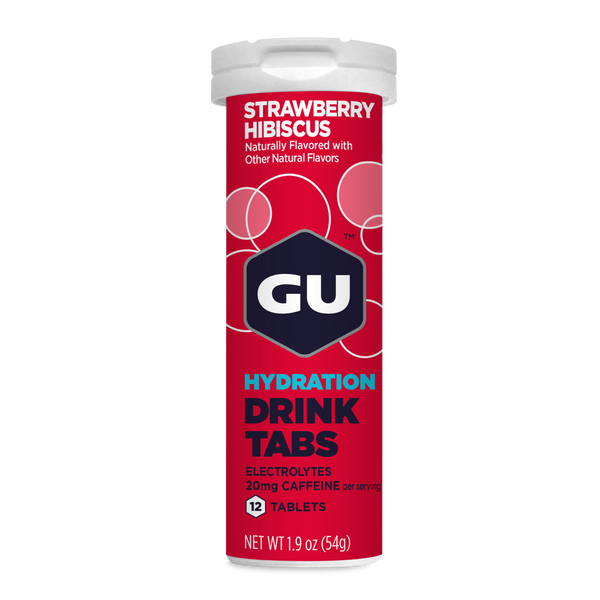
- Managing hydration and light carb support? GU Hydration Tabs keeps your fluid and electrolyte strategy separate from your carbohydrate fueling.
The athletes who get this right aren't the ones with the highest pain tolerance. They're the ones who trained their gut, timed their fuel, and matched their format to the demands of the day.
Frequently Asked Questions
Do energy chews absorb faster or slower than gels?
Energy chews absorb slightly slower than gels. This makes chews better suited to longer, moderate-intensity efforts like cycling, hiking, or ultramarathons where you're managing energy over hours.
Can I take an energy gel on an empty stomach?
Yes. GU Energy Gels are formulated to be easy on the stomach when taken as directed, along with 4-8 ounces of water. Take a gel 5-15 minutes before starting your workout to have energy readily available from the first step.
Is it better to take one gel or two gels per hour?
GU recommends starting with one gel every 45 minutes and building from there. If you are exercising longer than an hour or your effort is intense, we recommend taking one gel every 20-30 minutes.
What is gut training and why does it matter for endurance athletes?
Gut training is the practice of consuming carbohydrates during training at the same timing and quantity you plan to use in races. The gut adapts, helping athletes improve their tolerance to carbohydrates under stress. It’s best to avoid trying a new product or nutrition strategy for the first time on race day.