














Does Temperature Affect Taste? What Endurance Athletes Need to Know About Fueling Across Conditions
Temperature changes the way athletes’ taste, tolerate, and absorb fuel. The gel that works in February may be the wrong choice in July, and the reason is not just preference.
If your fueling strategy that worked all spring starts falling apart in summer heat, temperature is usually part of the explanation. Here is what changes physiologically across conditions, and how to adjust your product selection and timing accordingly.
Quick Reference: Hot vs. Cold Conditions
| Factor | Hot Conditions | Cold Conditions |
| Sweetness Perception | Amplified | Reduced |
| Flavor Threshold | Lower (more intense) | Higher (less intense) |
| Gastric Emptying Rate | Slowed | Normal to faster |
| GI Sensitivity | Increased |
Lower |
| Sweat Rate | High |
Lower, but still present |
| Sodium Needs | High |
Moderate |
| Recommended Gel Format | GU Liquid Energy | |
| Hydration Priority | High | Moderate to high |
| Caloric Demand | May decrease acutely | Increases in sustained cold |
How Temperature Changes Taste Perception
The Receptor Mechanism
Taste perception is not fixed. TRPM5, a temperature-sensitive protein in your taste receptor cells, becomes more active as temperature rises, amplifying the sweet taste signal your brain receives. Its activity increases with warming, which amplifies the transduction of sweet taste signals (Talavera et al., 2005).
Cold has the opposite effect. TRPM5 activity drops, sweetness registers less strongly, and what tastes balanced in summer can taste flat or mild in winter.
What this means on the road or trail:
- In heat: Sweetness registers more intensely. A gel that tastes balanced during a cool spring ride or early season race may taste aggressively sweet at the same effort level in summer.
- In cold: Sweetness registers less intensely. Flavors that read as too sweet in July are often well-calibrated for a February long run, a pre-dawn ski descent, or a cold open water swim.
- The formula does not change between seasons. Your sensory threshold does.
What This Means for Flavor Selection
Tasting a gel at room temperature in a non-exercising state tells you almost nothing about how it will perform at mile 17 of a summer marathon or hour four of a cold winter ride. Calibrate to the conditions during exercise.
- Test new flavors in training conditions that match your target race environment, not before or after.
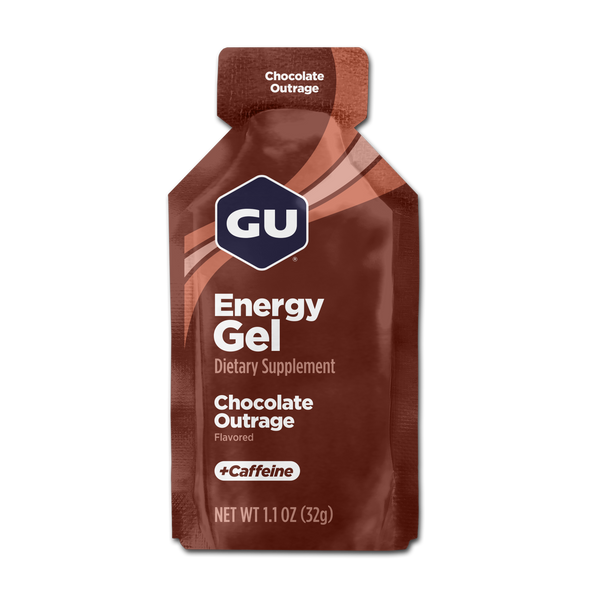
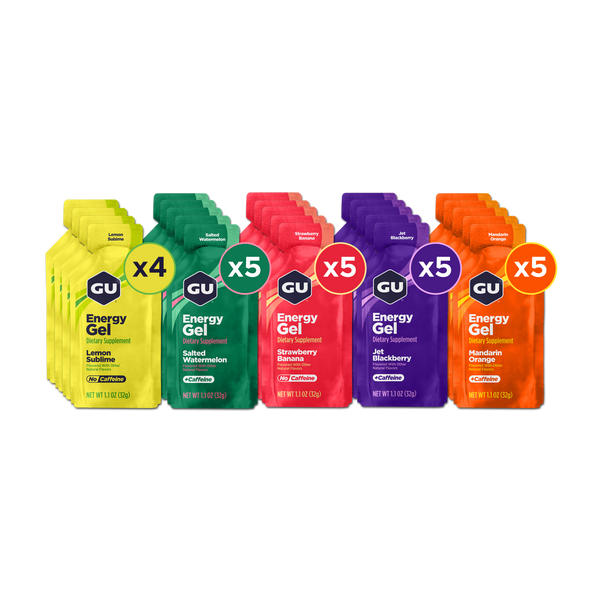
- If a flavor you rely on in winter starts to feel overwhelming as temperatures rise, that is a physiological signal, not a product problem. Try a lower-intensity flavor or switch to GU Liquid Energy Gel.
- Flavors dismissed as too sweet in summer are worth revisiting in your cold-weather training block.
- Rotate flavors over long efforts to reduce the flavor fatigue that comes from repeating the same taste hour after hour.
Fueling in Heat
How Heat Affects Your Stomach
In heat, your stomach empties more slowly. As core temperature and effort level rise, blood flow shifts away from the digestive system toward your working muscles and heart (Ribichini, 2023).
Your gut gets less blood, which means it processes and absorbs fuel more slowly than it would in cool conditions.
What this looks like during a race or long effort:
- A fueling volume that clears the stomach cleanly in cool conditions may sit longer in heat.
- Timing gaps between gels that worked in training may need to widen on a hot race day.
- The first signs are often fullness or low-grade nausea rather than acute cramping.
- Starting with smaller amounts earlier in the effort, before gut sensitivity compounds, is more effective than adjusting after symptoms begin.
Heat and exercise together also make the gut wall more permeable than either stressor does on its own (Dmytriv et, al., 2024). That increased permeability is associated with the cramping, nausea, and bloating athletes often experience in hot conditions, particularly in efforts beyond 90 minutes.
What worked at your spring race may not work at a summer triathlon in Phoenix or a July ultra. That is not a product problem. That is heat changing what your gut can handle.
GU's Guide: GI issues mid-race are rarely random. They are typically the result of unfamiliar nutrition, too much volume too quickly, or a formula the gut has not had the opportunity to adapt to during training.
Sodium and Electrolytes in Heat
Sweat rate increases in heat, and sodium is the primary electrolyte lost through sweat. For most sub-ultra race distances and efforts durationsunder four hours, sodium intake can follow tolerance and preference rather than a precise replacement target (McCubbin, 2023).
For longer efforts where fluid replacement needs are proportionally greater, such as ultramarathons, multi-stage cycling, or extended trail efforts, targeted sodium replacement becomes more relevant.
For those longer efforts in heat:
- GU Roctane Energy Gel provides 125–180 mg of sodium per packet, compared to 60–125 mg in GU Original Energy Gel, and is the stronger choice when sodium replacement is a priority.
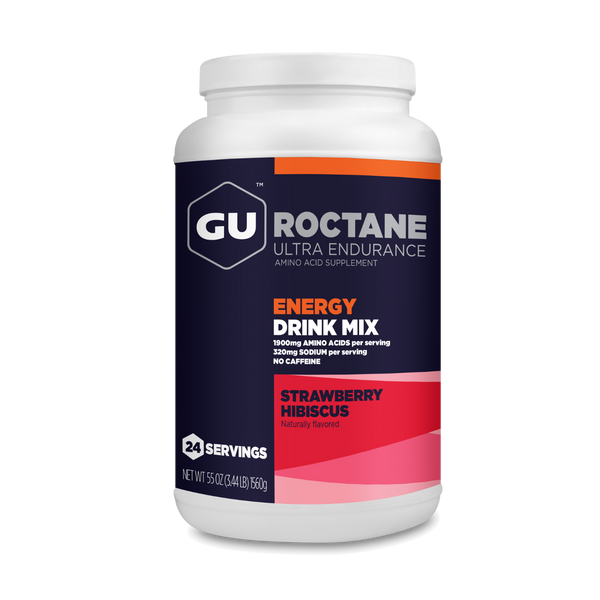
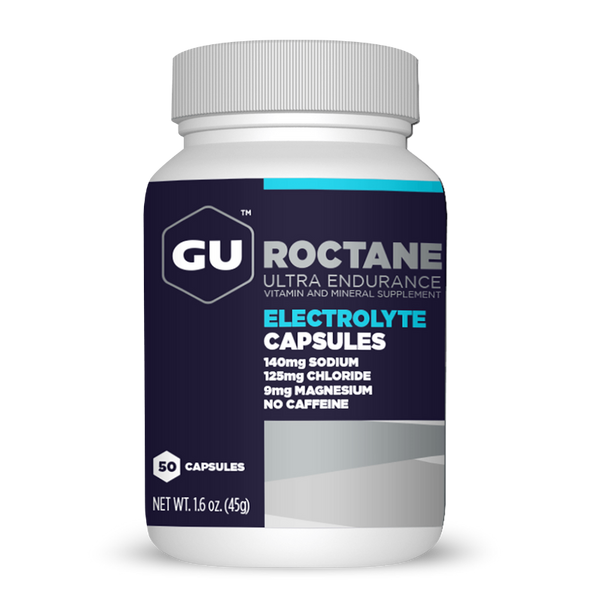
- GU Roctane Energy Drink Mix and GU Electrolyte Capsules address sodium replacement more completely than gels alone for athletes doing multi-hour efforts with high sweat rates. Each capsule provides 140 mg sodium, 125 mg chloride, and 9 mg magnesium. GU Roctane Energy Drink Mix delivers 320 mg sodium per serving.
| Product | Sodium per serving | When to use |
| GU Original Energy Gel | 60-125 mg sodium | Shorter efforts, moderate heat |
| GU Roctane Energy Gel | 125–180 mg sodium | Longer efforts, high heat, high sweat rate |
| GU Roctane Energy Drink Mix | 320 mg sodium | Efforts 90 min+, high ambient temperature, high sweat rate |
| GU Roctane Electrolyte Capsules | 140 mg sodium | Supplemental electrolyte support for multi-hour efforts and high sweat loss |
What to Use in Heat
In heat, fueling adjustments like a bit more time between gels, smaller amounts per serving, and closer attention to electrolytes can be helpful. GU Liquid Energy Gel is there as a lower-demand format if traditional gel textures start to feel like too much to take down.
- GU Liquid Energy: Lower-viscosity gel formula, leaves the palate quickly, same dual-source carbohydrate delivery as Original. Use from the start of hot-weather efforts rather than introducing mid-race.
- GU Roctane Energy Gel: Higher sodium content makes it the stronger choice for efforts over 90 minutes in heat or for athletes with high sweat rates.
- GU Roctane Energy Drink Mix / GU Electrolyte Capsules: For efforts where gel electrolytes alone do not replace sweat sodium losses.
- Caffeine timing: Start with non-caffeinated options and introduce small amounts of caffeine in the later stages of a hot-weather effort.
Fueling in Cold
How Cold Affects Your Stomach
The mechanisms that drive GI problems during exercise, slowed gastric emptying and increased gut permeability, are amplified by heat. Cold-weather efforts generally carry lower GI risk for athletes who struggle in warm conditions, though individual responses vary.
For most athletes, winter training and racing is more forgiving on the gut than summer efforts at the same intensity.
Cold raises the body's energy requirements. Maintaining core temperature in cold conditions draws on calories beyond what exercise alone demands, through shivering and the metabolic cost of heat production (Wehmanen et, al., 2026).
Athletes whose fueling strategies are based on summer training data may find they need more fuel per hour in cold, particularly during sustained lower-intensity efforts where the body is generating less internal heat from muscle work.
Activities where this is most pronounced:
- Ski touring and backcountry skiing: Low-intensity output over long durations in sustained cold. Caloric and carbohydrate demand is high and hunger signals are often delayed.
- Winter cycling: Wind chill compounds heat loss at road speeds. Effort feels lower but the thermal demand is significant.
- Cold trail running below freezing: Especially at early-morning start times when air temperature is at its lowest and the body is not yet fully warmed.
Sodium and Electrolytes in Cold
Sweat rate is lower in cold than in heat, which means sodium losses are generally more moderate. For most cold-weather efforts, sodium intake can follow tolerance and preference rather than a precise replacement target (McCubbin, 2023).
For longer cold-weather efforts where output is sustained and fluid intake is lower than in heat, electrolyte awareness still matters:
- GU Original Energy Gel provides 60–125 mg of sodium per packet, sufficient for most cold-weather efforts.
- GU Roctane Energy Gel provides 125–180 mg of sodium and is the stronger choice for athletes doing extended cold efforts at high output, such as a long winter cycling event or a multi-hour backcountry day.
- GU Electrolyte Capsules are a compact supplement option for athletes who want additional electrolyte support without additional calories.
What to Use in Cold
GU Original Energy Gel and GU Roctane Energy Gel hold up well in cold. Gut tolerance is generally less of a concern than in heat, and the main practical consideration is storage.
- GU Original / GU Roctane: Store against the body in cold. Gel viscosity increases at low temperatures, and a cold-stored packet is harder to consume quickly. A jersey pocket, bib short pocket, or jacket waist pocket keeps product at a usable temperature.
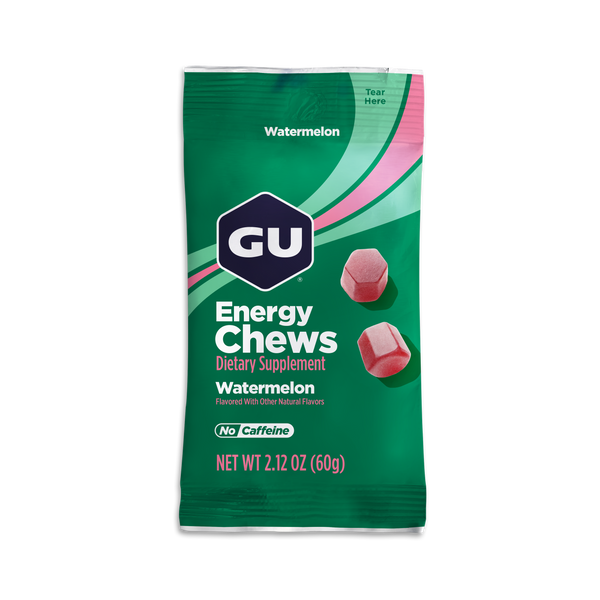
- GU Energy Chews: A strong option for athletes in gloves, athletes who prefer a solid format, or any situation where squeezing a packet is inconvenient. Same dual-source carbohydrate delivery as gels.
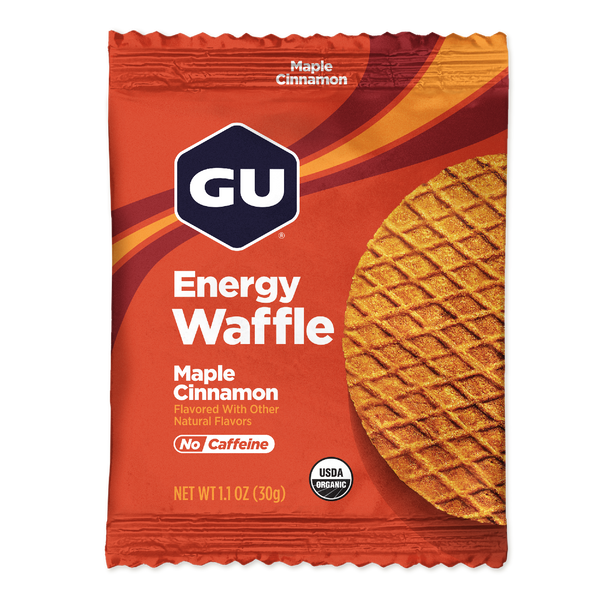
- GU Energy Waffle: Well-suited to long cold-weather efforts where hunger becomes a factor. Real-food format, individually wrapped, holds up in a pocket. Use at the start of a long effort or as a mid-effort supplement alongside gels.
Train With It Before You Race With It
What works in the kitchen does not always work on the road. Three things room-temperature tasting cannot tell you:
- How your gut will tolerate a formula under the cardiovascular and thermal demands of your target race.
- How a flavor will register after two hours of sustained effort, when sensory fatigue compounds.
- Whether your fueling timing and volume work at your target sweat rate and ambient temperature.
Research on gut training in endurance athletes has identified that practicing carbohydrate intake during training builds tolerance and absorption capacity over time (Jeukendrup, 2017). [KM1] Train the gut in the conditions you will race in.
References
- Talavera, K., Yasumatsu, K., Voets, T., Droogmans, G., Shigemura, N., Ninomiya, Y., Margolskee, R.F., and Nilius, B. Heat activation of TRPM5 underlies thermal sensitivity of sweet taste. Nature, 2005. 438(7070): p. 1022-1025. PMID: 16355226. https://pubmed.ncbi.nlm.nih.gov/16355226/
- Dmytriv, T.R., Storey, K.B., and Lushchak, V.I. Intestinal barrier permeability: the influence of gut microbiota, nutrition, and exercise. Frontiers in Physiology, 2024. PMCID: PMC11260943. PMID: 39040079. https://doi.org/10.3389/fphys.2024.1380713
- McCubbin, A.J. Modelling sodium requirements of athletes across a variety of exercise scenarios: Identifying when to test and target, or season to taste. European Journal of Sport Science, 2023. 23(6): p. 992-1000. PMID: 35616504. https://doi.org/10.1080/17461391.2022.2083526
- Ribichini, E., Scalese, G., Cesarini, A., Mocci, C., Pallotta, N., Severi, C., and Corazziari, E.S. Exercise-Induced Gastrointestinal Symptoms in Endurance Sports: A Review of Pathophysiology, Symptoms, and Nutritional Management. Dietetics, 2023. 2(3): p. 289-307. https://doi.org/10.3390/dietetics2030021
- Wehmanen, K.W., Ruby, B.C., Shriver, T.C., Ravelli, M.N., Kipp, S., McDaniel, J., Petushek, E.J., and Elmer, S.J. Energy and fluid balance during a 214-km winter ultraendurance race: a case study. Journal of Applied Physiology, 2026. PMID: 41651468. https://doi.org/10.1152/japplphysiol.01162.2025
- Jeukendrup, A.E. Training the Gut for Athletes. Sports Medicine, 2017. 47(Suppl 1): p. 101-110. https://link.springer.com/article/10.1007/s40279-017-0694-2